Parts feeders are vibratory mechanisms that function in the distribution of parts. They may aid robots or assist other automated processes to handle, hold, and make use of various components. They are also referred to as a branch of automated equipment that receives equipment in bulk and mechanically manipulates them at a predetermined frequency to obtain a consistent feed. Read More…
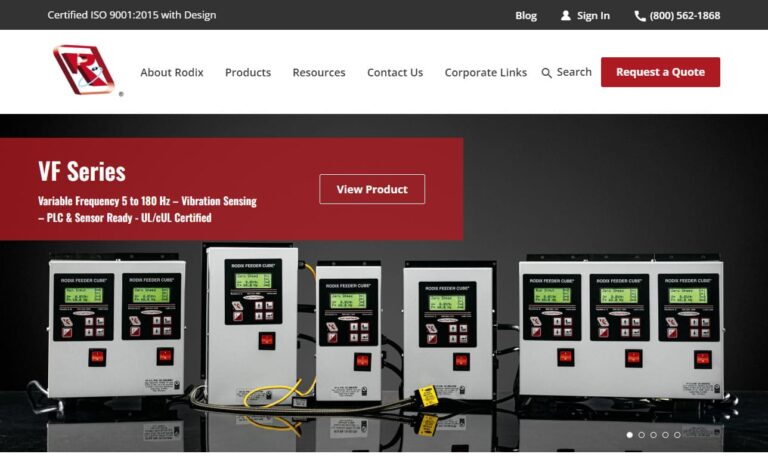
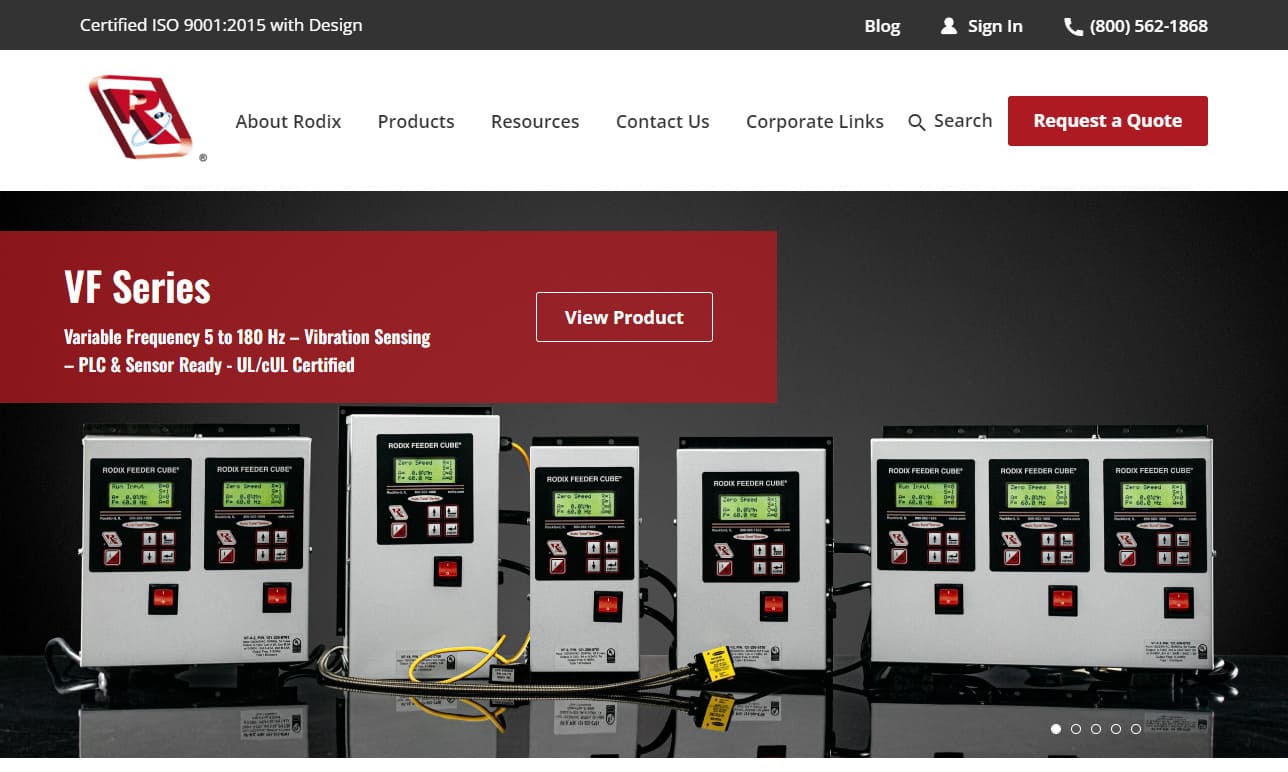
Rodix manufactures vibratory feeder controls, inline track drives, drive bases, & bulk storage hoppers for part feeding systems. Our line of vibratory feeder controls feature variable amplitude, variable frequency, line-voltage compensation, UL/cUL Listed, CE Marked, and more. We have experience working with machine integrators, vibratory feed system builders, and manufacturers.
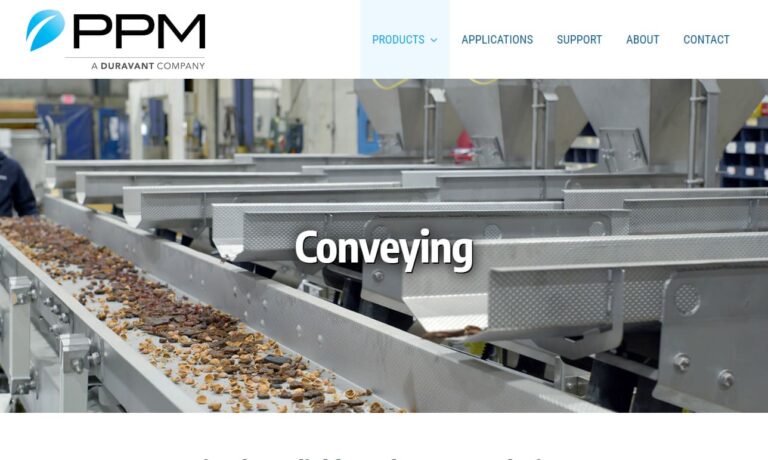
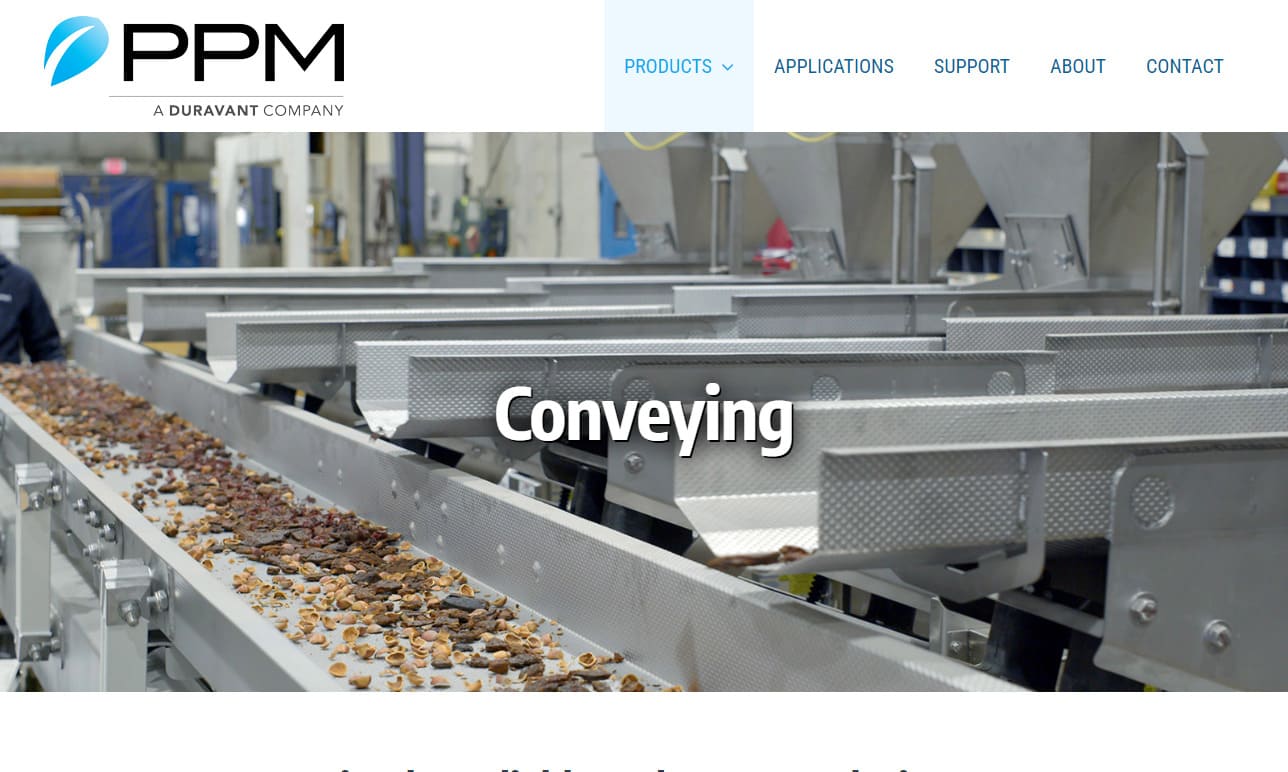
PPM Technologies Holdings, LLC is an innovative industry leader in the vibratory feeder industry. Our main focus has always been to provide our customers with high-quality products with the exact specifications for their needs. With our wide range of products, we are able to serve various industries.
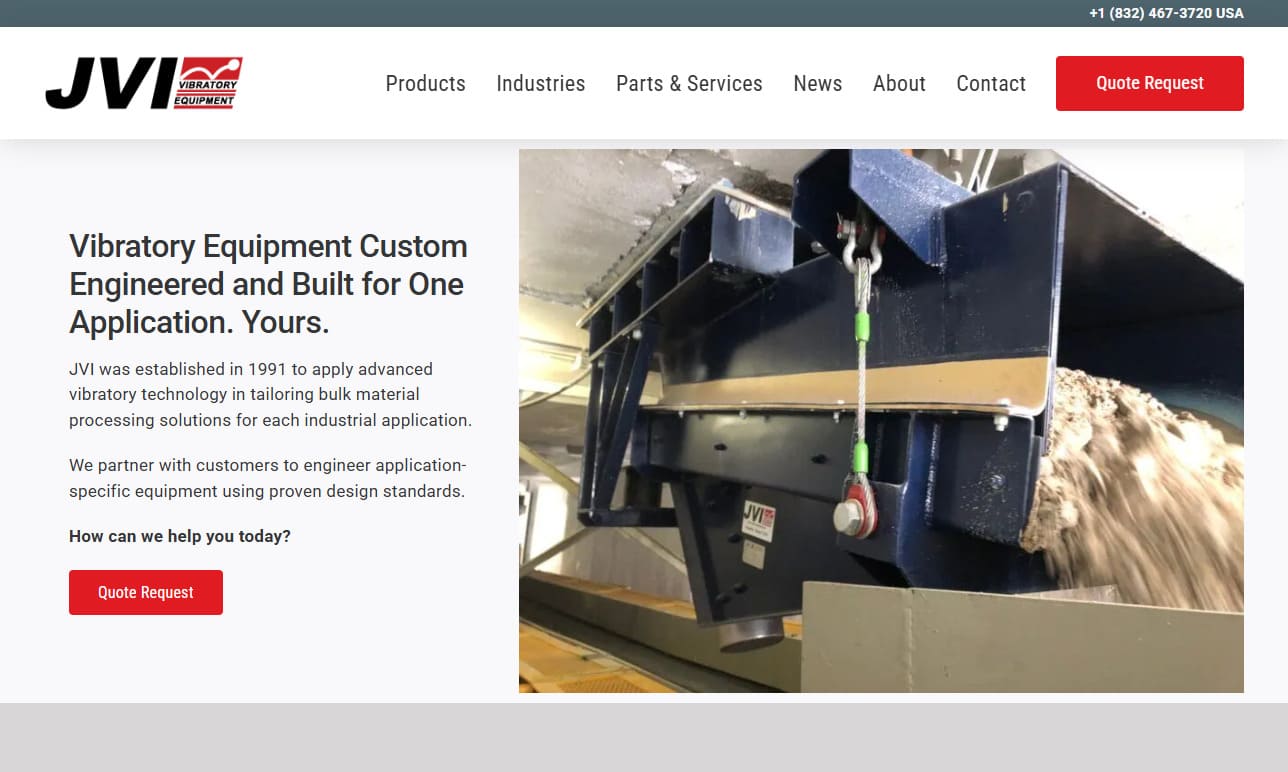
JVI Vibratory Equipment is a leading provider of vibratory process solutions. JVI manufactures vibratory feeders, screens, spiral elevators, conveyors, & grizzlies – all custom designed and manufactured specifically to meet the customer’s exact application requirements. JVI incorporates dry bulk material handling expertise with years of experience to provide innovative, custom machines...

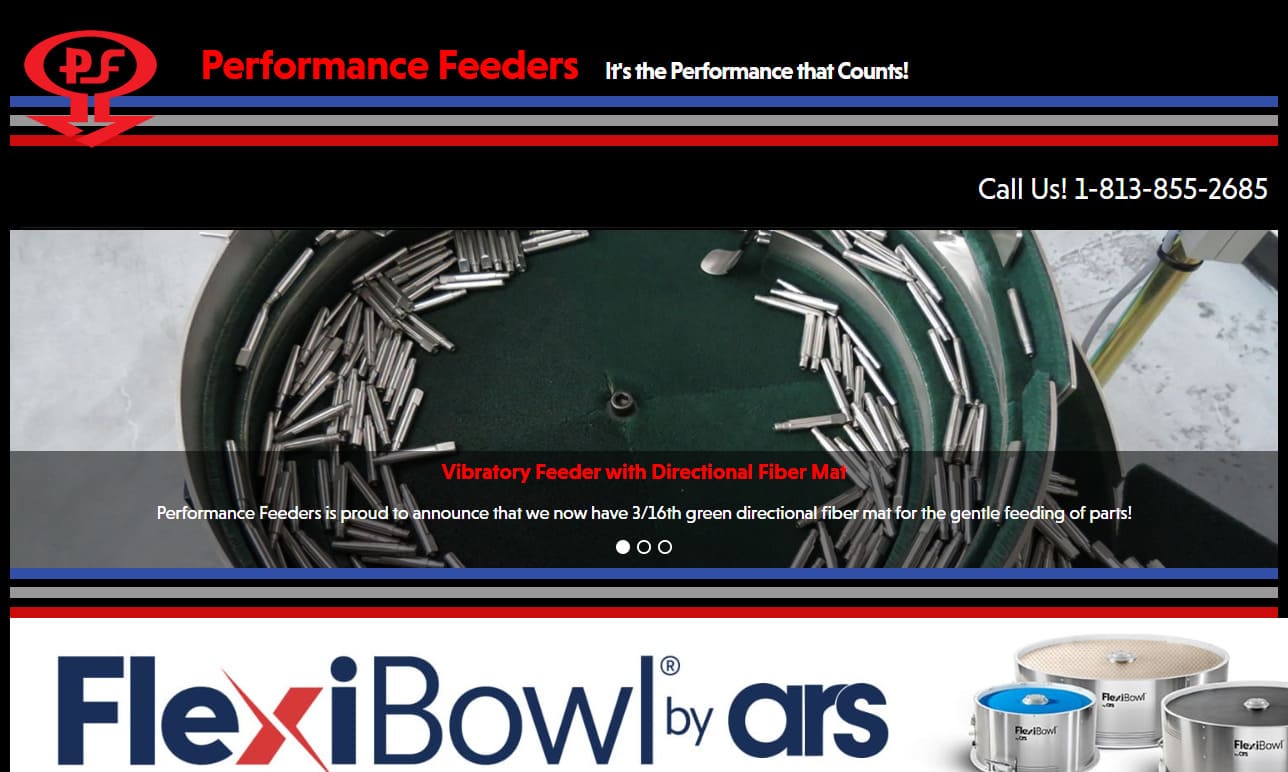
Vibratory bowl feeders are our specialty! For four decades we have been offering products that are guaranteed to last! Our vibratory bowl feeders come with multiple sound abatement options, standard and custom control packages and many other options for your convenience of choice! Visit our website today or get in touch with our customer service representatives by email or telephone today!


More Parts Feeder Manufacturers

Vibratory Parts Feeders
A vibratory parts feeder is an essential automation device that utilizes precise vibrations to move, orient, and control the flow of components or bulk materials through an assembly or processing machine. This technology is widely used in manufacturing and industrial environments to efficiently sort, feed, and deliver parts at a controlled rate, optimizing production line throughput. By combining vibration-induced movement with gravity, vibratory feeders gently transport parts in small, rapid hops along a defined pathway, reducing the risk of damage and minimizing manual intervention.
What is a Parts Feeder and How Does It Work?
Parts feeders are specialized material handling equipment designed to automatically present, orient, or feed individual parts or components into downstream manufacturing or assembly operations. They are critical to factory automation, ensuring that parts arrive in the correct orientation and at the right time for further processing. Most vibratory feeders use electromagnetic coils to create rapid, controlled vibrations that move items along a track or bowl. The design often leverages gravitational forces alongside vibration to guide parts through complex pathways, allowing integration with robotic pick-and-place systems, packaging machines, or inspection stations.
Types of Parts Feeders: Compare Solutions for Your Application
There are three main types of parts feeders commonly used in industrial automation:
- Centrifugal feeders
- Pneumatic feeders
- Vibratory bowl feeders
Centrifugal Parts Feeders
Centrifugal feeders feature a circular bowl equipped with one or more angular spinning disks and a conically-shaped driving rotor. Unlike vibratory feeders, centrifugal feeders rely on rotational force rather than vibration or spiral tracks. The spinning disks propel parts outward toward the bowl’s perimeter, where they are oriented and singulated for further processing. The independent rotation of the bowl and disks allows for high-speed operation and gentle handling of delicate or irregularly shaped components. This makes centrifugal parts feeders ideal for industries such as medical device assembly, electronics, and packaging, where high throughput and reduced part damage are essential.

Key Features and Benefits of Centrifugal Feeders
- High-speed feeding for mass production lines
- Gentle handling of fragile, lightweight, or oddly shaped parts
- Low noise operation compared to vibratory bowl feeders
- Customization options for part orientation and singulation
- Minimal maintenance requirements and robust design
Common Applications
- Pharmaceutical and medical device assembly
- Cosmetic packaging lines
- Food and beverage product sorting
- Automotive components, such as clips and caps
Pneumatic Parts Feeders
Pneumatic parts feeders operate using compressed air or pneumatic pistons to advance and position components. The feeder's motion is typically driven by air pressure or a combination of pneumatic and hydraulic actuators, which move parts along the feeder track. Pneumatic feeders are especially valued for environments requiring explosion-proof equipment, applications with sensitive electronics, or situations where electrical noise from electromagnetic feeders must be avoided. Once a batch is processed, electronic signals or sensors trigger the mechanism to move new components into position, ensuring consistent throughput.

Key Features and Benefits of Pneumatic Feeders
- Excellent for hazardous or cleanroom environments
- Non-electrical actuation for reduced risk of interference
- Capable of handling a wide range of part shapes and sizes
- Consistent and repeatable part presentation
- Low maintenance with fewer moving parts
Common Applications
- Electronics assembly where electromagnetic noise must be minimized
- Pharmaceutical manufacturing and medical packaging
- Explosive or flammable environments (ATEX compliance)
- Automotive and aerospace component handling
Vibratory Bowl Feeders
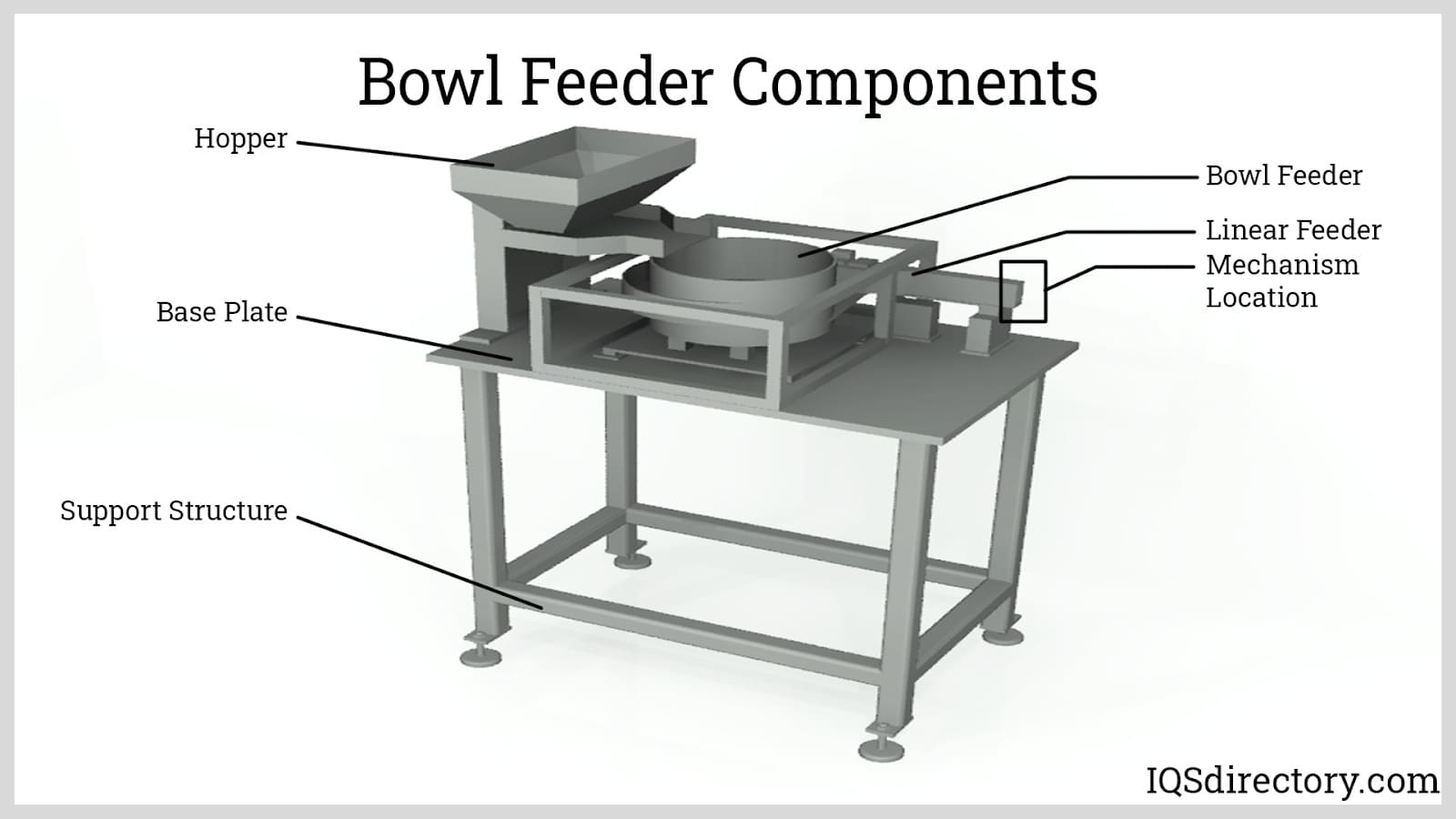
Vibratory bowl feeders are the most widely used type of automatic parts feeder in industrial automation. Each system consists of a bowl mounted atop a vibrating drive unit. The bowl contains a spiral or helical track that guides parts as they are vibrated upward and outward until they reach the bowl’s edge, where they are oriented and discharged for downstream processes. Vibratory bowl feeders are renowned for their versatility, being able to handle a vast range of component sizes, shapes, and materials, including metal, plastic, rubber, and glass parts.

Key Features and Benefits of Vibratory Bowl Feeders
- Universal application for small to medium part sizes
- Handles bulk parts with varying geometries
- Customizable tooling for unique orientation requirements
- Reliable, low-maintenance operation
- Compatible with vision systems and automation robots
Common Applications
- Automated assembly lines for electronics and consumer goods
- Automotive fasteners, bearings, and clips
- Pharmaceutical and medical device packaging
- Sorting, inspection, and robotic pick-and-place systems
How to Choose the Right Parts Feeder for Your Automation Needs
When evaluating which parts feeding system to integrate into your production line, consider the following factors to ensure optimal performance, efficiency, and longevity:
- Part characteristics: Analyze the size, shape, weight, material, and fragility of your components. Irregular or delicate parts may require centrifugal or custom vibratory solutions.
- Feed rate requirements: Estimate the rate at which parts must be delivered. High-speed lines benefit from centrifugal feeders, while precise, consistent feeding is a strength of vibratory and pneumatic feeders.
- Orientation and singulation: Determine whether your process needs parts to be oriented a specific way for downstream assembly or inspection.
- Environmental considerations: Assess requirements for cleanroom compatibility, noise levels, or explosion-proof operation.
- Integration with automation: Consider compatibility with robotic arms, vision inspection, and other factory automation equipment.
- Budget and maintenance: Weigh initial investment against long-term maintenance and operational costs.
Are you unsure which type of parts feeder is best for your manufacturing process? Contact a parts feeder specialist or use our quote request tool to get personalized recommendations based on your application and production volume.
Applications of Parts Feeders Across Industries
Parts feeders are vital in a variety of industries and manufacturing processes. Their ability to efficiently sort, orient, and deliver parts streamlines assembly and packaging operations, boosts productivity, and reduces manual labor. Typical applications include:
- Electronics manufacturing: Feeding resistors, capacitors, connectors, and micro-components for automated PCB assembly.
- Automotive industry: Sorting and orienting fasteners, clips, bushings, and precision parts for engine, transmission, and interior assembly.
- Pharmaceuticals: Handling capsules, tablets, syringes, and medical device components in hygienic or sterile environments.
- Food and beverage: Feeding bottle caps, closures, and packaging materials at high speeds for bottling and canning lines.
- Consumer products: Assembly of pens, batteries, toys, and small appliances.
- Recycling: Sorting recyclable materials such as plastics, metals, and glass for separation and further processing.
- Aerospace: Precision handling of small, mission-critical components during aircraft and satellite assembly.
Emerging Use Cases: Integration with Industry 4.0 and Smart Manufacturing
Modern parts feeders are increasingly integrated with IoT sensors, vision inspection systems, and robotic automation to support real-time monitoring, predictive maintenance, and adaptive feeding. As factories move toward Industry 4.0, parts feeders play a crucial role in data-driven production environments, enabling flexible retooling, remote diagnostics, and seamless connectivity with enterprise resource planning (ERP) systems.
Advantages of Parts Feeders in Automated Production
- Enhanced productivity: Automation of part feeding reduces manual labor and cycle time, significantly increasing throughput in high-volume manufacturing environments.
- Improved quality and consistency: Automated feeders ensure accurate part orientation and delivery, minimizing human error and supporting repeatable quality standards.
- Cost savings: Reduction in labor costs, downtime, and product waste contributes to lower total cost of ownership.
- Worker safety: Automation reduces repetitive manual handling, lowering the risk of injury and improving ergonomic conditions.
- Flexible manufacturing: Rapid changeover and reconfiguration of feeders support high-mix, low-volume production runs common in modern manufacturing.
Frequently Asked Questions about Parts Feeders
- What materials can vibratory parts feeders handle? Most vibratory feeders can process metal, plastic, glass, rubber, and ceramic parts. Custom feeder bowls and tooling can be designed for specific material characteristics or part geometries.
- How do I determine the right size and type of feeder for my application? Consider your part size, weight, required feed rate, orientation needs, and environmental conditions. Consulting with a parts feeder manufacturer or distributor can help you specify the optimal system.
- Can parts feeders be integrated with robots and vision systems? Yes, most modern feeders offer integration options for robotic pick-and-place, inline inspection, data logging, and remote monitoring.
- What are typical maintenance requirements? Vibratory and centrifugal feeders require periodic cleaning, inspection for wear, and occasional retooling for new parts. Pneumatic feeders may require air system maintenance.
How to Specify and Source the Best Parts Feeder for Your Process
Choosing the right parts feeder manufacturer is crucial for ensuring long-term reliability, performance, and support. Consider the following steps to make an informed purchasing decision:
- Define your requirements: Gather information about your parts (size, material, geometry), throughput needs, and integration requirements.
- Research manufacturers: Use our comprehensive parts feeder directory to compare at least five reputable companies. Review their capabilities, customer references, and case studies.
- Request technical proposals: Ask for detailed quotations, including feeder system layouts, customization options, and aftersales support.
- Evaluate support and service: Consider the manufacturer’s ability to provide training, spare parts, field service, and technical assistance.
- Compare total cost of ownership: Look beyond initial purchase price to include reliability, energy efficiency, maintenance, and future scalability.
For a step-by-step guide or to get personalized recommendations, contact our expert team or use our request for quote (RFQ) form to connect directly with multiple parts feeder suppliers.
Why Partner with a Specialized Parts Feeder Supplier?
Working with an experienced parts feeder supplier or systems integrator ensures that your solution is tailored to your unique application needs. Specialists provide custom bowl tooling, simulation testing, and on-site support, helping you avoid costly downtime and production bottlenecks. In addition, reputable suppliers offer ongoing training, spare parts, and upgrades as your requirements evolve.
Key Decision Factors for Selecting a Parts Feeder Manufacturer
- Years of industry experience and technical expertise
- Proven track record in your target industry
- Customization and engineering flexibility
- Available support services and response times
- Comprehensive warranty and after-sales programs
Are you ready to automate your production line or improve your material handling efficiency? Start your search now by visiting our parts feeder directory to compare manufacturers, or request a quote for your specific parts feeding application.
Additional Resources and Related Topics
- Types of Vibratory Bowl Feeders: Designs and Customization
- Complete Parts Feeder Manufacturer Directory
- Contact Us for a Free Application Assessment
- Industries Served by Parts Feeder Systems
- How to Automate Your Assembly Process: Guide
Get Started: Request a Quote or Consultation
If you are looking to boost your factory automation, eliminate manual bottlenecks, or improve part orientation and presentation in your production process, a customized parts feeder solution can deliver measurable ROI. Contact us today using our quick quote form to receive expert advice and competitive pricing from leading parts feeder manufacturers.
 Balers
 Compactors
 Granulators
 Grapplers
 Metal Shears
 Pulverizers
 Separators
 Shredders
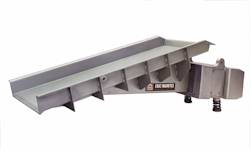 Vibratory Feeders
 Castings & Forgings
 Bulk Material Handling
 Electrical & Electronic Components
 Flow Instrumentation
 Hardware
 Material Handling Equipment
 Metal Cutting Services
 Metal Forming Services
 Metal Suppliers
 Motion Control Products
 Plant & Facility Equipment
 Plant & Facility Supplies
 Plastic Molding Processes
 Pumps & Valves
 Recycling Equipment
 Rubber Products & Services